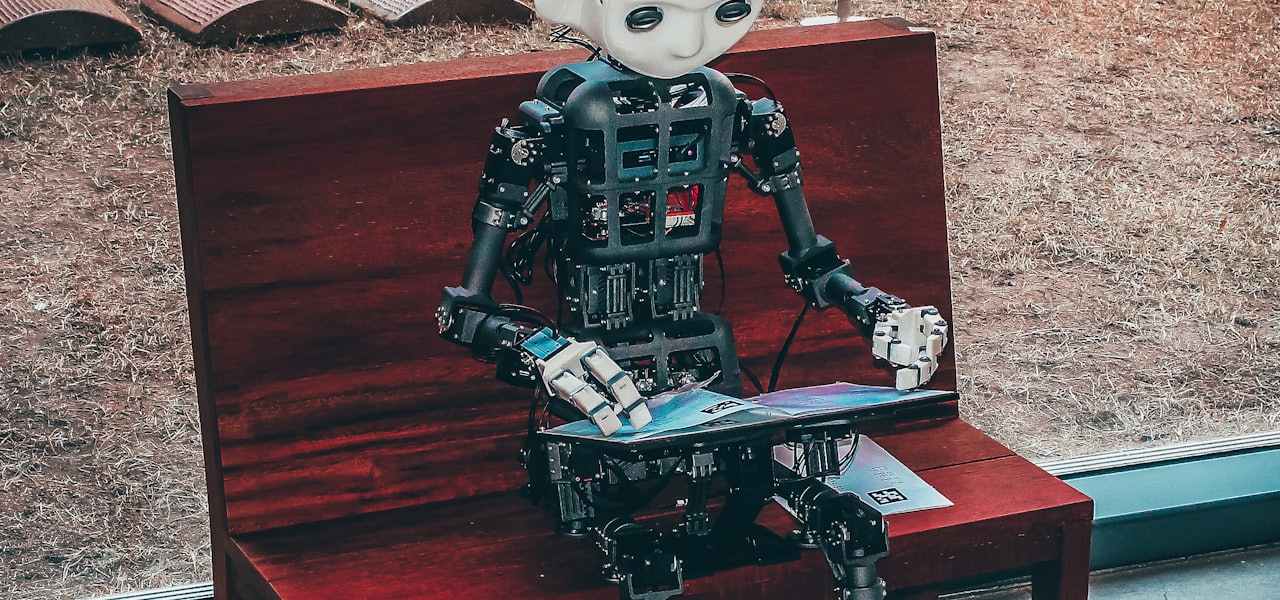
Kunihiko Fukushima (Japanese: 福島 邦彦, born 16 March 1936) is a Japanese computer scientist, most noted for his work on artificial neural networks and deep learning. He is currently working part-time as a senior research scientist at the Fuzzy Logic Systems Institute in Fukuoka, Japan. == Notable scientific achievements == In 1980, Fukushima published the neocognitron, the original deep convolutional neural network (CNN) architecture. Fukushima proposed several supervised and unsupervised learning algorithms to train the parameters of a deep neocognitron such that it could learn internal representations of incoming data. Today, however, the CNN architecture is usually trained through backpropagation. This approach is now heavily used in computer vision. In 1969 Fukushima introduced the ReLU (Rectifier Linear Unit) activation function in the context of visual feature extraction in hierarchical neural networks, which he called "analog threshold element". (Though the ReLU was first used by Alston Householder in 1941 as a mathematical abstraction of biological neural networks.) As of 2017 it is the most popular activation function for deep neural networks. == Education and career == In 1958, Fukushima received his Bachelor of Engineering in electronics from Kyoto University. He became a senior research scientist at the NHK Science & Technology Research Laboratories. In 1989, he joined the faculty of Osaka University. In 1999, he joined the faculty of the University of Electro-Communications. In 2001, he joined the faculty of Tokyo University of Technology. From 2006 to 2010, he was a visiting professor at Kansai University. Fukushima acted as founding president of the Japanese Neural Network Society (JNNS). He also was a founding member on the board of governors of the International Neural Network Society (INNS), and president of the Asia-Pacific Neural Network Assembly (APNNA). He was one of the board of governors of the International Neural Network Society (INNS) in 1989-1990 and 1993-2005. == Awards == In 2020, Fukushima received the Bower Award and Prize for Achievement in Science. In 2022, Fukushima became a laureate of the Asian Scientist 100 by the Asian Scientist. He also received the IEICE Achievement Award and Excellent Paper Awards, the IEEE Neural Networks Pioneer Award, the APNNA Outstanding Achievement Award, the JNNS Excellent Paper Award and the INNS Helmholtz Award.
Software construction
Software construction is the process of creating working software via coding and integration. The process includes unit and integration testing although does not include higher level testing such as system testing. Construction is an aspect of the software development lifecycle and is integrated in the various software development process models with varying focus on construction as an activity separate from other activities. In the waterfall model, a software development effort consists of sequential phases including requirements analysis, design, and planning which are prerequisites for starting construction. In an iterative model such as scrum, evolutionary prototyping, or extreme programming, construction as an activity that occurs concurrently or overlapping other activities. Construction planning may include defining the order in which components are created and integrated, the software quality management processes, and the allocation of tasks to teams and developers. To facilitate project management, numerous construction aspects can be measured; these include the amount of code developed, modified, reused, and destroyed, code complexity, code inspection statistics, faults-fixed and faults-found rates, and effort expended. These measurements can be useful for aspects such as ensuring quality and improving the process. == Activities == Construction includes many activities. === Coding === The following are a few of the key aspects of the coding activity: Naming Choice of name for each identifier. One study showed that the effort required to debug a program is minimized when variable names are between 10 and 16 characters. Logic Organization into statements and routines Highly cohesive routines proved to be less error prone than routines with lower cohesion. A study of 450 routines found that 50 percent of the highly cohesive routines were fault free compared to only 18 percent of routines with low cohesion. Another study of a different 450 routines found that routines with the highest coupling-to-cohesion ratios had 7 times as many errors as those with the lowest coupling-to-cohesion ratios and were 20 times as costly to fix. Although studies showed inconclusive results regarding the correlation between routine sizes and the rate of errors in them, but one study found that routines with fewer than 143 lines of code were 2.4 times less expensive to fix than larger routines. Another study showed that the code needed to be changed least when routines averaged 100 to 150 lines of code. Another study found that structural complexity and amount of data in a routine were correlated with errors regardless of its size. Interfaces between routines are some of the most error-prone areas of a program. One study showed that 39 percent of all errors were errors in communication between routines. Unused parameters are correlated with an increased error rate. In one study, only 17 to 29 percent of routines with more than one unreferenced variable had no errors, compared to 46 percent in routines with no unused variables. The number of parameters of a routine should be 7 at maximum as research has found that people generally cannot keep track of more than about seven chunks of information at once. One experiment showed that designs which access arrays sequentially, rather than randomly, result in fewer variables and fewer variable references. One experiment found that loops-with-exit are more comprehensible than other kinds of loops. Regarding the level of nesting in loops and conditionals, studies have shown that programmers have difficulty comprehending more than three levels of nesting. Control flow complexity has been shown to correlate with low reliability and frequent errors. Modularity Structuring and refactoring the code into classes, packages and other structures. When considering containment, the maximum number of data members in a class shouldn't exceed 7±2. Research has shown that this number is the number of discrete items a person can remember while performing other tasks. When considering inheritance, the number of levels in the inheritance tree should be limited. Deep inheritance trees have been found to be significantly associated with increased fault rates. When considering the number of routines in a class, it should be kept as small as possible. A study on C++ programs has found an association between the number of routines and the number of faults. A study by NASA showed that the putting the code into well-factored classes can double the code reusability compared to the code developed using functional design. Error handling Encoding logic to handle both planned and unplanned errors and exceptions. Resource management Managing computational resource use via exclusion mechanisms and discipline in accessing serially reusable resources, including threads or database locks. Security Prevention of code-level security breaches such as buffer overrun and array index overflow. Optimization Optimization while avoiding premature optimization. Documentation Both embedded in the code as comments and as external documents. === Integration === Integration is about combining separately constructed parts. Concerns include planning the sequence in which components will be integrated, creating scaffolding to support interim versions of the software, determining the degree of testing and quality work performed on components before they are integrated, and determining points in the project at which interim versions are tested. === Testing === Testing can reduce the time between when faulty logic is inserted in the code and when it is detected. In some cases, testing is performed after code has been written, but in test-first programming, test cases are created before code is written. Construction includes at least two forms of testing, often performed by the developer who wrote the code: unit testing and integration testing. === Reuse === Software reuse entails more than creating and using libraries. It requires formalizing the practice of reuse by integrating reuse processes and activities into the software life cycle. The tasks related to reuse in software construction during coding and testing may include: selection of the reusable code, evaluation of code or test re-usability, reporting reuse metrics. === Quality assurance === Techniques for ensuring quality as software is constructed include: Testing One study found that the average defect detection rates of Unit testing and integration testing are 30% and 35% respectively. Software inspection With respect to software inspection, one study found that the average defect detection rate of formal code inspections is 60%. Regarding the cost of finding defects, a study found that code reading detected 80% more faults per hour than testing. Another study shown that it costs six times more to detect design defects by using testing than by using inspections. A study by IBM showed that only 3.5 hours were needed to find a defect through code inspections versus 15–25 hours through testing. Microsoft has found that it takes 3 hours to find and fix a defect by using code inspections and 12 hours to find and fix a defect by using testing. In a 700 thousand lines program, it was reported that code reviews were several times as cost-effective as testing. Studies found that inspections result in 20% - 30% fewer defects per 1000 lines of code than less formal review practices and that they increase productivity by about 20%. Formal inspections will usually take 10% - 15% of the project budget and will reduce overall project cost. Researchers found that having more than 2 - 3 reviewers on a formal inspection doesn't increase the number of defects found, although the results seem to vary depending on the kind of material being inspected. Technical review With respect to technical review, one study found that the average defect detection rates of informal code reviews and desk checking are 25% and 40% respectively. Walkthroughs were found to have a defect detection rate of 20% - 40%, but were found also to be expensive especially when project pressures increase. Code reading was found by NASA to detect 3.3 defects per hour of effort versus 1.8 defects per hour for testing. It also finds 20% - 60% more errors over the life of the project than different kinds of testing. A study of 13 reviews about review meetings, found that 90% of the defects were found in preparation for the review meeting while only around 10% were found during the meeting. Static analysis With respect to Static analysis (IEEE1028), studies have shown that a combination of these techniques needs to be used to achieve a high defect detection rate. Other studies showed that different people tend to find different defects. One study found that the extreme programming practices of pair programming, desk checking, unit testing, integration testing, and regression testing can achieve a 90% defect detection rate. An experiment involving exper
Creepy treehouse
Creepy treehouse is a social media term, or internet slang, referring to websites or technologies that are used for educational purposes but regarded by students as an invasion of privacy. == History == The term was first described in 2008 by Utah Valley University instructional-design services director Jared Stein as "institutionally controlled technology/tool that emulates or mimics pre-existing [sic] technologies or tools that may already be in use by the learners, or by learners' peer groups." This was when social media such as Facebook was starting to become mainstream and professors would try and get students to interact with them on the site for educational purposes. Some professors would require their students to use Facebook or Twitter as part of class assignments. == Usage == The term was first described as "technological innovations by faculty members that make students’ skin crawl." The term also refers to online accounts and websites that users tend to avoid, especially young people who avoid visiting the pages of educators and other adults. Author Martin Weller defines creepy treehouse as a digital space where authority figures are viewed as invading younger people's privacy. One such example is a professor giving his students an option to use a popular video game to learn about history instead of writing an essay. Students in that class chose to write the essay instead as the method was previously unmentioned and it was not an unnatural method of interaction. Another example given was Blackboard Sync, a feature that was used to connect the school website Blackboard with students' Facebook accounts. == Solutions == University of Regina professor Alec Couros suggests that instead of "forcing" student participation with their own digital platforms, professors should use methods like online forums. Jason Jones of chronicle.com suggested letting students create social media groups for the class themselves and explaining why using technologies is required and important.
Hardware-based encryption
Hardware-based encryption is the use of computer hardware to assist software, or sometimes replace software, in the process of data encryption. Typically, this is implemented as part of the processor's instruction set. For example, the AES encryption algorithm (a modern cipher) can be implemented using the AES instruction set on the ubiquitous x86 architecture. Such instructions also exist on the ARM architecture. However, more unusual systems exist where the cryptography module is separate from the central processor, instead being implemented as a coprocessor, in particular a secure cryptoprocessor or cryptographic accelerator, of which an example is the IBM 4758, or its successor, the IBM 4764. Hardware implementations can be faster and less prone to exploitation than traditional software implementations, and furthermore can be protected against tampering. == History == Prior to the use of computer hardware, cryptography could be performed through various mechanical or electro-mechanical means. An early example is the Scytale used by the Spartans. The Enigma machine was an electro-mechanical system cipher machine notably used by the Germans in World War II. After World War II, purely electronic systems were developed. In 1987 the ABYSS (A Basic Yorktown Security System) project was initiated. The aim of this project was to protect against software piracy. However, the application of computers to cryptography in general dates back to the 1940s and Bletchley Park, where the Colossus computer was used to break the encryption used by German High Command during World War II. The use of computers to encrypt, however, came later. In particular, until the development of the integrated circuit, of which the first was produced in 1960, computers were impractical for encryption, since, in comparison to the portable form factor of the Enigma machine, computers of the era took the space of an entire building. It was only with the development of the microcomputer that computer encryption became feasible, outside of niche applications. The development of the World Wide Web lead to the need for consumers to have access to encryption, as online shopping became prevalent. The key concerns for consumers were security and speed. This led to the eventual inclusion of the key algorithms into processors as a way of both increasing speed and security. == Implementations == === In the instruction set === ==== x86 ==== The X86 architecture, as a CISC (Complex Instruction Set Computer) Architecture, typically implements complex algorithms in hardware. Cryptographic algorithms are no exception. The x86 architecture implements significant components of the AES (Advanced Encryption Standard) algorithm, which can be used by the NSA for Top Secret information. The architecture also includes support for the SHA Hashing Algorithms through the Intel SHA extensions. Whereas AES is a cipher, which is useful for encrypting documents, hashing is used for verification, such as of passwords (see PBKDF2). ==== ARM ==== ARM processors can optionally support Security Extensions. Although ARM is a RISC (Reduced Instruction Set Computer) architecture, there are several optional extensions specified by ARM Holdings. === As a coprocessor === IBM 4758 – The predecessor to the IBM 4764. This includes its own specialised processor, memory and a Random Number Generator. IBM 4764 and IBM 4765, identical except for the connection used. The former uses PCI-X, while the latter uses PCI-e. Both are peripheral devices that plug into the motherboard. === Proliferation === Advanced Micro Devices (AMD) processors are also x86 devices, and have supported the AES instructions since the 2011 Bulldozer processor iteration. Due to the existence of encryption instructions on modern processors provided by both Intel and AMD, the instructions are present on most modern computers. They also exist on many tablets and smartphones due to their implementation in ARM processors. == Advantages == Implementing cryptography in hardware means that part of the processor is dedicated to the task. This can lead to a large increase in speed. In particular, modern processor architectures that support pipelining can often perform other instructions concurrently with the execution of the encryption instruction. Furthermore, hardware can have methods of protecting data from software. Consequently, even if the operating system is compromised, the data may still be secure (see Software Guard Extensions). == Disadvantages == If, however, the hardware implementation is compromised, major issues arise. Malicious software can retrieve the data from the (supposedly) secure hardware – a large class of method used is the timing attack. This is far more problematic to solve than a software bug, even within the operating system. Microsoft regularly deals with security issues through Windows Update. Similarly, regular security updates are released for Mac OS X and Linux, as well as mobile operating systems like iOS, Android, and Windows Phone. However, hardware is a different issue. Sometimes, the issue will be fixable through updates to the processor's microcode (a low level type of software). However, other issues may only be resolvable through replacing the hardware, or a workaround in the operating system which mitigates the performance benefit of the hardware implementation, such as in the Spectre exploit.
Vue.js
Vue.js (commonly referred to as Vue; pronounced "view") is an open-source model–view–viewmodel front end JavaScript framework for building user interfaces and single-page applications. It was created by Evan You and is maintained by him and the rest of the active core team members. == Overview == Vue.js features an incrementally adaptable architecture that focuses on declarative rendering and component composition. The core library is focused on the view layer only. Advanced features required for complex applications such as routing, state management and build tooling are offered via officially maintained supporting libraries and packages. Vue.js allows for extending HTML with HTML attributes called directives. The directives offer functionality to HTML applications, and come as either built-in or user defined directives. == History == Vue was created by Evan You after working for Google using AngularJS in several projects. He later summed up his thought process: "I figured, what if I could just extract the part that I really liked about Angular and build something really lightweight." The first source code commit to the project was dated July 2013, at which time it was originally named "Seed". Vue was first publicly announced the following February, in 2014. Version names are often derived from manga and anime series, with the first letters arranged in alphabetical order. === Versions === When a new major is released i.e. v3.y.z, the last minor i.e. 2.x.y will become a LTS release for 18 months (bug fixes and security patches) and for the following 18 months will be in maintenance mode (security patches only). Vue 3 was officially released in September 2020. According to the State of Vue.js Report 2025, 96% of surveyed developers reported having used Vue 3.x. However, 35% also indicated that they used Vue 2.7.x in the past year, reflecting continued reliance on Vue 2 despite its end of support. The report also noted that more than a quarter of respondents encountered challenges when migrating from Vue 2 to Vue 3. === State management evolution === 2015 - Vuex introduced as official state management solution 2021 - Pinia development begins as Vuex 5 experiment 2022 - Pinia becomes officially recommended for new projects 2023 - Vue team announces Vuex maintenance mode transition According to the State of Vue.js Report 2025, the Vue's core team recommendation is reflected in developer adoption–over 80% of surveyed developers reported using Pinia while Vuex still had 38.4% usage, indicating ongoing reliance on the older library. == Features == === Components === Vue components extend basic HTML elements to encapsulate reusable code. At a high level, components are custom elements to which the Vue's compiler attaches behavior. In Vue, a component is essentially a Vue instance with pre-defined options. The code snippet below contains an example of a Vue component. The component presents a button and prints the number of times the button is clicked: === Templates === Vue uses an HTML-based template syntax that allows binding the rendered DOM to the underlying Vue instance's data. All Vue templates are valid HTML that can be parsed by specification-compliant browsers and HTML parsers. Vue compiles the templates into virtual DOM render functions. A virtual Document Object Model (or "DOM") allows Vue to render components in its memory before updating the browser. Combined with the reactivity system, Vue can calculate the minimal number of components to re-render and apply the minimal amount of DOM manipulations when the app state changes. Vue users can use template syntax or choose to directly write render functions using hyperscript either through function calls or JSX. Render functions allow applications to be built from software components. === Reactivity === Vue features a reactivity system that uses plain JavaScript objects and optimized re-rendering. Each component keeps track of its reactive dependencies during its render, so the system knows precisely when to re-render, and which components to re-render. === Transitions === Vue provides a variety of ways to apply transition effects when items are inserted, updated, or removed from the DOM. This includes tools to: Automatically apply classes for CSS transitions and animations Integrate third-party CSS animation libraries, such as Animate.css Use JavaScript to directly manipulate the DOM during transition hooks Integrate third-party JavaScript animation libraries, such as Velocity.js When an element wrapped in a transition component is inserted or removed, this is what happens: Vue will automatically sniff whether the target element has CSS transitions or animations applied. If it does, CSS transition classes will be added/removed at appropriate timings. If the transition component provided JavaScript hooks, these hooks will be called at appropriate timings. If no CSS transitions/animations are detected and no JavaScript hooks are provided, the DOM operations for insertion and/or removal will be executed immediately on next frame. === Routing === A traditional disadvantage of single-page applications (SPAs) is the inability to share links to the exact "sub" page within a specific web page. Because SPAs serve their users only one URL-based response from the server (it typically serves index.html or index.vue), bookmarking certain screens or sharing links to specific sections is normally difficult if not impossible. To solve this problem, many client-side routers delimit their dynamic URLs with a "hashbang" (#!), e.g. page.com/#!/. However, with HTML5 most modern browsers support routing without hashbangs. Vue provides an interface to change what is displayed on the page based on the current URL path – regardless of how it was changed (whether by emailed link, refresh, or in-page links). Additionally, using a front-end router allows for the intentional transition of the browser path when certain browser events (i.e. clicks) occur on buttons or links. Vue itself doesn't come with front-end hashed routing. But the open-source "vue-router" package provides an API to update the application's URL, supports the back button (navigating history), and email password resets or email verification links with authentication URL parameters. It supports mapping nested routes to nested components and offers fine-grained transition control. With Vue, developers are already composing applications with small building blocks building larger components. With vue-router added to the mix, components must merely be mapped to the routes they belong to, and parent/root routes must indicate where children should render. The code above: Sets a front-end route at websitename.com/user/
Machine learning in video games
Artificial intelligence and machine learning techniques are used in video games for a wide variety of applications such as non-player character (NPC) control, procedural content generation (PCG) and deep learning-based content generation. Machine learning is a subset of artificial intelligence that uses historical data to build predictive and analytical models. This is in sharp contrast to traditional methods of artificial intelligence such as search trees and expert systems. Information on machine learning techniques in the field of games is mostly known to public through research projects as most gaming companies choose not to publish specific information about their intellectual property. The most publicly known application of machine learning in games is likely the use of deep learning agents that compete with professional human players in complex strategy games. There has been a significant application of machine learning on games such as Atari/ALE, Doom, Minecraft, StarCraft, and car racing. Other games that did not originally exists as video games, such as chess and Go have also been affected by the machine learning. == Overview of relevant machine learning techniques == === Deep learning === Deep learning is a subset of machine learning which focuses heavily on the use of artificial neural networks (ANN) that learn to solve complex tasks. Deep learning uses multiple layers of ANN and other techniques to progressively extract information from an input. Due to this complex layered approach, deep learning models often require powerful machines to train and run on. ==== Convolutional neural networks ==== Convolutional neural networks (CNN) are specialized ANNs that are often used to analyze image data. These types of networks are able to learn translation invariant patterns, which are patterns that are not dependent on location. CNNs are able to learn these patterns in a hierarchy, meaning that earlier convolutional layers will learn smaller local patterns while later layers will learn larger patterns based on the previous patterns. A CNN's ability to learn visual data has made it a commonly used tool for deep learning in games. === Recurrent neural network === Recurrent neural networks are a type of ANN that are designed to process sequences of data in order, one part at a time rather than all at once. An RNN runs over each part of a sequence, using the current part of the sequence along with memory of previous parts of the current sequence to produce an output. These types of ANN are highly effective at tasks such as speech recognition and other problems that depend heavily on temporal order. There are several types of RNNs with different internal configurations; the basic implementation suffers from a lack of long term memory due to the vanishing gradient problem, thus it is rarely used over newer implementations. ==== Long short-term memory ==== A long short-term memory (LSTM) network is a specific implementation of a RNN that is designed to deal with the vanishing gradient problem seen in simple RNNs, which would lead to them gradually "forgetting" about previous parts of an inputted sequence when calculating the output of a current part. LSTMs solve this problem with the addition of an elaborate system that uses an additional input/output to keep track of long term data. LSTMs have achieved very strong results across various fields, and were used by several monumental deep learning agents in games. === Reinforcement learning === Reinforcement learning is the process of training an agent using rewards and/or punishments. The way an agent is rewarded or punished depends heavily on the problem; such as giving an agent a positive reward for winning a game or a negative one for losing. Reinforcement learning is used heavily in the field of machine learning and can be seen in methods such as Q-learning, policy search, Deep Q-networks and others. It has seen strong performance in both the field of games and robotics. === Neuroevolution === Neuroevolution involves the use of both neural networks and evolutionary algorithms. Instead of using gradient descent like most neural networks, neuroevolution models make use of evolutionary algorithms to update neurons in the network. Researchers claim that this process is less likely to get stuck in a local minimum and is potentially faster than state of the art deep learning techniques. == Deep learning agents == Machine learning agents have been used to take the place of a human player rather than function as NPCs, which are deliberately added into video games as part of designed gameplay. Deep learning agents have achieved impressive results when used in competition with both humans and other artificial intelligence agents. === Chess === Chess is a turn-based strategy game that is considered a difficult AI problem due to the computational complexity of its board space. Similar strategy games are often solved with some form of a Minimax Tree Search. These types of AI agents have been known to beat professional human players, such as the historic 1997 Deep Blue versus Garry Kasparov match. Since then, machine learning agents have shown ever greater success than previous AI agents. === Go === Go is another turn-based strategy game which is considered an even more difficult AI problem than chess. The state space of is Go is around 10^170 possible board states compared to the 10^120 board states for Chess. Prior to recent deep learning models, AI Go agents were only able to play at the level of a human amateur. ==== AlphaGo ==== Google's 2015 AlphaGo was the first AI agent to beat a professional Go player. AlphaGo used a deep learning model to train the weights of a Monte Carlo tree search (MCTS). The deep learning model consisted of 2 ANN, a policy network to predict the probabilities of potential moves by opponents, and a value network to predict the win chance of a given state. The deep learning model allows the agent to explore potential game states more efficiently than a vanilla MCTS. The network were initially trained on games of humans players and then were further trained by games against itself. ==== AlphaGo Zero ==== AlphaGo Zero, another implementation of AlphaGo, was able to train entirely by playing against itself. It was able to quickly train up to the capabilities of the previous agent. === StarCraft series === StarCraft and its sequel StarCraft II are real-time strategy (RTS) video games that have become popular environments for AI research. Blizzard and DeepMind have worked together to release a public StarCraft 2 environment for AI research to be done on. Various deep learning methods have been tested on both games, though most agents usually have trouble outperforming the default AI with cheats enabled or skilled players of the game. ==== Alphastar ==== Alphastar was the first AI agent to beat professional StarCraft 2 players without any in-game advantages. The deep learning network of the agent initially received input from a simplified zoomed out version of the gamestate, but was later updated to play using a camera like other human players. The developers have not publicly released the code or architecture of their model, but have listed several state of the art machine learning techniques such as relational deep reinforcement learning, long short-term memory, auto-regressive policy heads, pointer networks, and centralized value baseline. Alphastar was initially trained with supervised learning, it watched replays of many human games in order to learn basic strategies. It then trained against different versions of itself and was improved through reinforcement learning. The final version was hugely successful, but only trained to play on a specific map in a protoss mirror matchup. === Dota 2 === Dota 2 is a multiplayer online battle arena (MOBA) game. Like other complex games, traditional AI agents have not been able to compete on the same level as professional human player. The only widely published information on AI agents attempted on Dota 2 is OpenAI's deep learning Five agent. ==== OpenAI Five ==== OpenAI Five utilized separate long short-term memory networks to learn each hero. It trained using a reinforcement learning technique known as Proximal Policy Learning running on a system containing 256 GPUs and 128,000 CPU cores. Five trained for months, accumulating 180 years of game experience each day, before facing off with professional players. It was eventually able to beat the 2018 Dota 2 esports champion team in a 2019 series of games. === Planetary Annihilation === Planetary Annihilation is a real-time strategy game which focuses on massive scale war. The developers use ANNs in their default AI agent. === Supreme Commander 2 === Supreme Commander 2 is a real-time strategy (RTS) video game. The game uses Multilayer Perceptrons (MLPs) to control a platoon’s reaction to encountered enemy units. Total of four MLPs are used, one for each platoon type: land, naval
GlTF
glTF (Graphics Library Transmission Format or GL Transmission Format and formerly known as WebGL Transmissions Format or WebGL TF) is a standard file format for three-dimensional scenes and models. A glTF file uses one of two possible file extensions: .gltf (JSON/ASCII) or .glb (binary). Both .gltf and .glb files may reference external binary and texture resources. Alternatively, both formats may be self-contained by directly embedding binary data buffers (as base64-encoded strings in .gltf files or as raw byte arrays in .glb files). An open standard developed and maintained by the Khronos Group, it supports 3D model geometry, appearance, scene graph hierarchy, and animation. It is intended to be a streamlined, interoperable format for the delivery of 3D assets, while minimizing file size and runtime processing by apps. As such, its creators have described it as the "JPEG of 3D". == Overview == The glTF format stores data primarily in JSON. The JSON may also contain blobs of binary data known as buffers, and refer to external files, for storing mesh data, images, etc. The binary .glb format also contains JSON text, but serialized with binary chunk headers to allow blobs to be directly appended to the file. The fundamental building blocks of a glTF scene are nodes. Nodes are organized into a hierarchy, such that a node may have other nodes defined as children. Nodes may have transforms relative to their parent. Nodes may refer to resources, such as meshes, skins, and cameras. Meshes may refer to materials, which refer to textures, which refer to images. Scenes are defined using an array of root nodes. Most of the top-level glTF properties use a flat hierarchy for storage. Nodes are saved in an array and are referred to by index, including by other nodes. A glTF scene refers to its root nodes by index. Furthermore, nodes refer to meshes by index, which refer to materials by index, which refer to textures by index, which refer to images by index. All glTF data structures support being extended using a JSON property, allowing arbitrary JSON data to be added. == Releases == === glTF 1.0 === Members of the COLLADA working group conceived the file format in 2012. At SIGGRAPH 2012, Khronos presented a demo of glTF, which was then called WebGL Transmissions Format (WebGL TF). On October 19, 2015, Khronos released the glTF 1.0 specification. ==== Adoption of glTF 1.0 ==== At SIGGRAPH 2016, Oculus announced their adoption of glTF citing the similarities to their ovrscene format. In October 2016, Microsoft joined the 3D Formats working group at Khronos to collaborate on glTF. === glTF 2.0 === The second version, glTF 2.0, was released in June 2017, and is a complete overhaul of the file format from version 1.0, with most tools adopting the 2.0 version. Based on a proposal by Fraunhofer originally presented at SIGGRAPH 2016, physically based rendering (PBR) was added, replacing WebGL shaders used in glTF 1.0. glTF 2.0 added the GLB binary format into the base specification. Other upgrades include sparse accessors and morph targets for techniques such as facial animation, and schema tweaks and breaking changes for corner cases or performance such as replacing top-level glTF object properties with arrays for faster index-based access. There is ongoing work towards import and export in Unity and an integrated multi-engine viewer and validator. ==== Adoption of glTF 2.0 ==== On March 3, 2017, Microsoft announced that they would be using glTF 2.0 as the 3D asset format across their product line, including Paint 3D, 3D Viewer, Remix 3D, Babylon.js, and Microsoft Office. Sketchfab also announced support for glTF 2.0. The glTF and GLB formats are used on and supported by companies including DGG, UX3D, Sketchfab, Facebook, Microsoft, Meta, Google, Adobe, Box, TurboSquid, Unreal Engine, Unity, and Qt Quick 3D. The format has been noted as an important standard for augmented reality, integrating with modeling software such as Autodesk Maya, Autodesk 3ds Max, and Poly. In February 2020, the Smithsonian Institution launched their Open Access Initiative, releasing approximately 2.8 million 2D images and 3D models into the public domain, using glTF for the 3D models. In July 2022, glTF 2.0 was released as the ISO/IEC 12113:2022 International Standard. Khronos stated they would make regular submissions to bring updates and new widely adopted glTF functionality into refreshed versions of ISO/IEC 12113 to ensure that there is no long-term divergence between the ISO/IEC and Khronos specifications. The open-source game engine Godot supports importing glTF 2.0 files since version 3.0 and export since version 4.0. === Extensions === The glTF format can be extended with arbitrary JSON to add new data and functionality. Extensions can be placed on any part of a glTF, including nodes, animations, materials, textures, and on the entire document. Khronos keeps a non-comprehensive registry of glTF extensions on GitHub, including all official Khronos extensions and a few third-party extensions. PBR extensions model the physical appearance of real-world objects, allowing developers to create realistic 3D assets that have the correct appearance. As new PBR extensions are released, they continue to expand PBR capabilities within the glTF framework, allowing a wider range of scenes and objects to be realistically rendered as 3D assets. The KTX 2.0 extension for universal texture compression enables 3D models in the glTF format to be highly compressed and to use natively supported texture formats, reducing file size and boosting rendering speed. Draco is a glTF extension for mesh compression, to compress and decompress 3D meshes, to help reduce the size of 3D files. It compresses vertex attributes, normals, colors, and texture coordinates. Various glTF extensions for game engine interoperability have been developed by OMI group. This includes extensions for physics shapes, physics bodies, physics joints, audio playback, seats, spawn points, and more. The VRM consortium has developed glTF extensions for advanced humanoid 3D avatars including dynamic spring bones and toon materials. == Derivative formats == 3D Tiles, an OGC Community Standard, builds on glTF to add a spatial data structure, metadata, and declarative styling for streaming massive heterogeneous 3D geospatial datasets. VRM, a model format for VR, is built on the .glb format. It is a 3D humanoid avatar specification and file format. == Software ecosystem == Khronos maintains the glTF Sample Viewer for viewing glTF assets. Khronos also maintains the glTF Validator for validating if 3D models conform to the glTF specification. Khronos maintains a glTF Compressor tool to interactively optimize and fine-tune compression settings for glTF assets using KTX 2.0 textures. glTF loaders are in open-source WebGL engines including PlayCanvas, Three.js, Babylon.js, Cesium, PEX, xeogl, and A-Frame. The Godot game engine supports and recommends the glTF format, with both import and export support. Open-source glTF converters are available from COLLADA, FBX, and OBJ. Assimp can import and export glTF. glTF files can also be directly exported from a variety of 3D editors, such as Blender, Unity (using the glTFast importer/exporter), Freecad, Vectary, Autodesk 3ds Max (natively or using Verge3D exporter), Autodesk Maya (using babylon.js exporter), Autodesk Inventor, Modo, Houdini, Paint 3D, Godot, and Substance Painter. Open-source glTF utility libraries are available for programming languages including JavaScript, Node.js, C++, C#, Python, Haskell, Java, Go, Rust, Haxe, Ada, and TypeScript. Khronos keeps a list of these libraries and other related applications on their ecosystem site. The Khronos 3D Commerce Working Group released Asset Creation Guidelines in 2020 outlining best practices for use of the glTF file format in 3D Commerce. In 2025, the Working Group launched Asset Creation Guidelines 2.0, a continuously updated resource with additional guidance for geometry, mesh optimization, UV maps, textures, materials/PBR performance, and web optimization. The Khronos PBR Neutral Tone Mappers specification is a tone mapper designed to faithfully reproduce an object's base color, hue, and saturation when using PBR rendering under grayscale lighting, supporting brand- and product-accurate color representation. Khronos maintains the glTF Asset Auditor to allow retailers and advertising technology platforms to validate 3D assets against either a default Audit Profile modelled on the 2020 3D Commerce Asset Creation Guidelines or a custom profile defined by the target application.